NuMeta Labs

100% ONLINE PROCESS │ NO MEMBERSHIP REQUIREMENTS │ US BASED LICENSED PHARMACIES │ TRANSPARENT PRICING. NO HIDDEN FEES │ 100% ONLINE PROCESS │ NO MEMBERSHIP REQUIREMENTS │ US BASED LICENSED PHARMACIES │ TRANSPARENT PRICING. NO HIDDEN FEES │

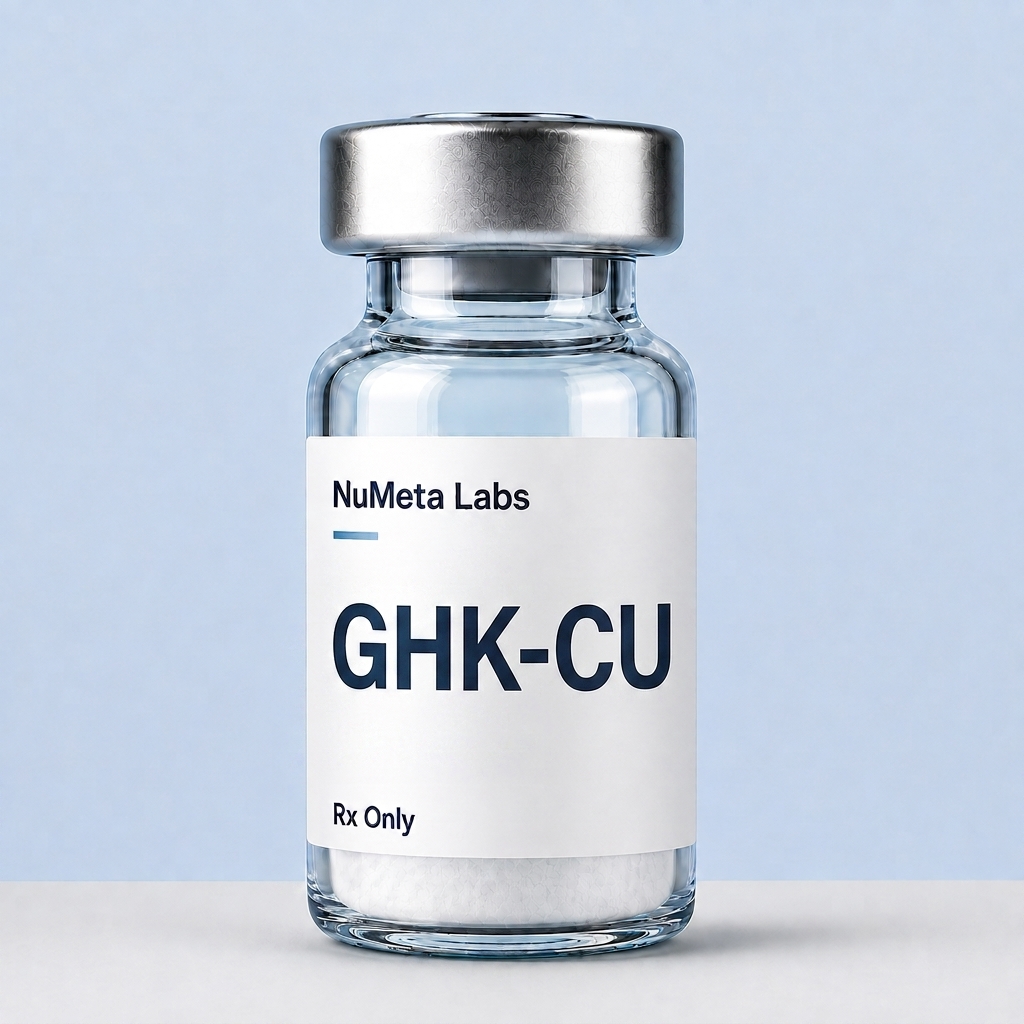
GHK-CU

Price range: $29.00 through $55.00

GHK-Cu is a naturally occurring copper peptide studied in controlled laboratory environments. Researchers use this compound in structured studies focused on peptide signaling and copper binding behavior.

  • Naturally occurring copper polypeptide found in biological systems
  • Studied in laboratory research focused on peptide and copper interactions
  • Suitable for controlled and repeatable research workflows
SKU: N/A Category:

GHK-Cu is a naturally occurring copper peptide studied in controlled laboratory environments. Researchers use this compound in structured studies focused on peptide signaling and copper binding behavior.

  • Naturally occurring copper polypeptide found in biological systems
  • Studied in laboratory research focused on peptide and copper interactions
  • Suitable for controlled and repeatable research workflows

GHK-Cu Research Peptide

  • GHK-Cuis a naturally occurring copper polypeptide found in blood plasma and saliva. Researchers study this peptide in controlled laboratory environments as part of structured research focused on peptide signaling, copper binding behavior, and molecular interaction models. Its defined peptide structure and copper complex make it suitable for repeatable studies under standardized research conditions.
  • Because GHK-Cu exists naturally in biological systems, researchers use it to explore how copper bound peptides behave in experimental models. This research helps teams examine peptide and metal interactions while maintaining precise control over laboratory variables. As a result, laboratories can generate consistent and reliable data across multiple study phases.
  • In laboratory settings, scientists handle GHK-Cu using standard peptide preparation and safety procedures. The peptide format supports accurate measurement and controlled application during experiments. Therefore, research teams can maintain stable testing conditions and focus on observation, documentation, and data analysis.
  • Researchers value GHK-Cu for its clear structure and compatibility with structured research workflows. Its consistent composition helps reduce variation during experimentation and supports comparison across studies involving copper peptide complexes. In addition, its predictable handling characteristics make it suitable for long term laboratory projects that require dependable research materials.
  • Ongoing scientific research continues to include GHK-Cu in peptide focused laboratory studies. Its natural origin, defined structure, and suitability for controlled research models make it a useful tool for advanced experimental work.

Important Notice

  • GHK-Cu is provided strictly for research use only. This product is not intended for human or animal use, clinical applications, diagnostic procedures, or consumption of any kind. All research must be conducted by qualified professionals in appropriate laboratory environments and in compliance with applicable regulations and guidelines.


weight

50mg, 100mg

Reviews

There are no reviews yet.

Be the first to review “GHK-CU”

Your email address will not be published. Required fields are marked *

FAQs

What is GHK-Cu?
GHK-Cu is a naturally occurring peptide complex consisting of the tripeptide glycyl-L-histidyl-L-lysine bound to a copper ion. It was first isolated from human plasma and has a strong affinity for binding copper(II) ions.
How does GHK-Cu form and what is its structure?
The tripeptide GHK binds copper ions via its histidine residue and other backbone nitrogens, forming a stable complex. This copper-bound form, GHK-Cu, is water soluble and capable of interacting with biological systems at a molecular level.
What biological activities are associated with GHK-Cu in research?
In laboratory and animal studies, GHK-Cu has been shown to influence pathways related to collagen synthesis, tissue repair, wound healing, and extracellular matrix remodeling by interacting with fibroblasts and stimulating the production of structural proteins.
What cellular processes has GHK-Cu been observed to modulate?
Scientific literature documents that GHK-Cu can modulate gene expression and signaling pathways involved in inflammation, antioxidant responses, and tissue remodeling, including effects on collagen, elastin, and glycosaminoglycan production.
In what research contexts has GHK-Cu been studied?
GHK-Cu has been studied in in vitro and animal models to explore its roles in wound healing, skin regeneration, and modulation of inflammatory pathways. Some research extends into other organ systems where tissue repair and oxidative stress regulation are of interest.
Why is GHK-Cu of interest in peptide and regenerative research?
Researchers are interested in GHK-Cu because it combines a small peptide with copper binding, enabling it to influence signaling pathways for tissue repair, extracellular matrix production, and gene regulation, making it a useful tool for studying complex biological responses to injury and stress.

Peptide Research


  • ubMed/PMC: Pickart (2012) on oxidative stress/neuroprotection [PMID: 23723666]; Pickart et al. (2018) on gene data/regeneration [PMID: 30018507]; Pickart (2008) tissue remodeling [PMID: 18644186]; Pickart et al. (2017) nervous system [PMID: 28208804] – https://pmc.ncbi.nlm.nih.gov/articles/PMC3359723/
  • Reviews: Bagno et al. (2020) skin regeneration [PMID: 26177688]; Pickart et al. (2015) COPD reversal [PMID: 26177688]; Seyhan et al. (2024) anti-wrinkle permeability [PMID: 39963574]. – https://pmc.ncbi.nlm.nih.gov/articles/PMC8789089/
  • Recent: Innerbody (2025) benefits/side effects; Peptides.org (2025) safety profile; PMC reviews on gene data [PMC6073405, PMC8789089].

Reviews/Trials: Ogórek et al. (2025) skin permeation [PMID: 40586182]; Liu et al. (2023) microemulsions [PMID: 37896231]; Saraceno et al. (2021) cancer gene modulation [DOI: 10.21926/obm.genet.2102128] – https://pubmed.ncbi.nlm.nih.gov/11045606/

ARE YOU OVER 21 YEARS OF AGE?

I confirm that I am 21+ years of age, have read and agree to the Terms & Conditions & Research Use Only Policy, acknowledge that products are for research use only, and agree to contact customer support before filing a payment dispute or chargeback.

You cannot copy content of this page

error: Content is protected !!
0
0
Your Cart
Empty CartYour cart is emptyReturn to Shop
Secure Checkout
Fast Shipping
Easy Returns
Scroll to Top